Most people lose money trading perps. Not because they are dumb — because they are playing the hardest game in crypto.
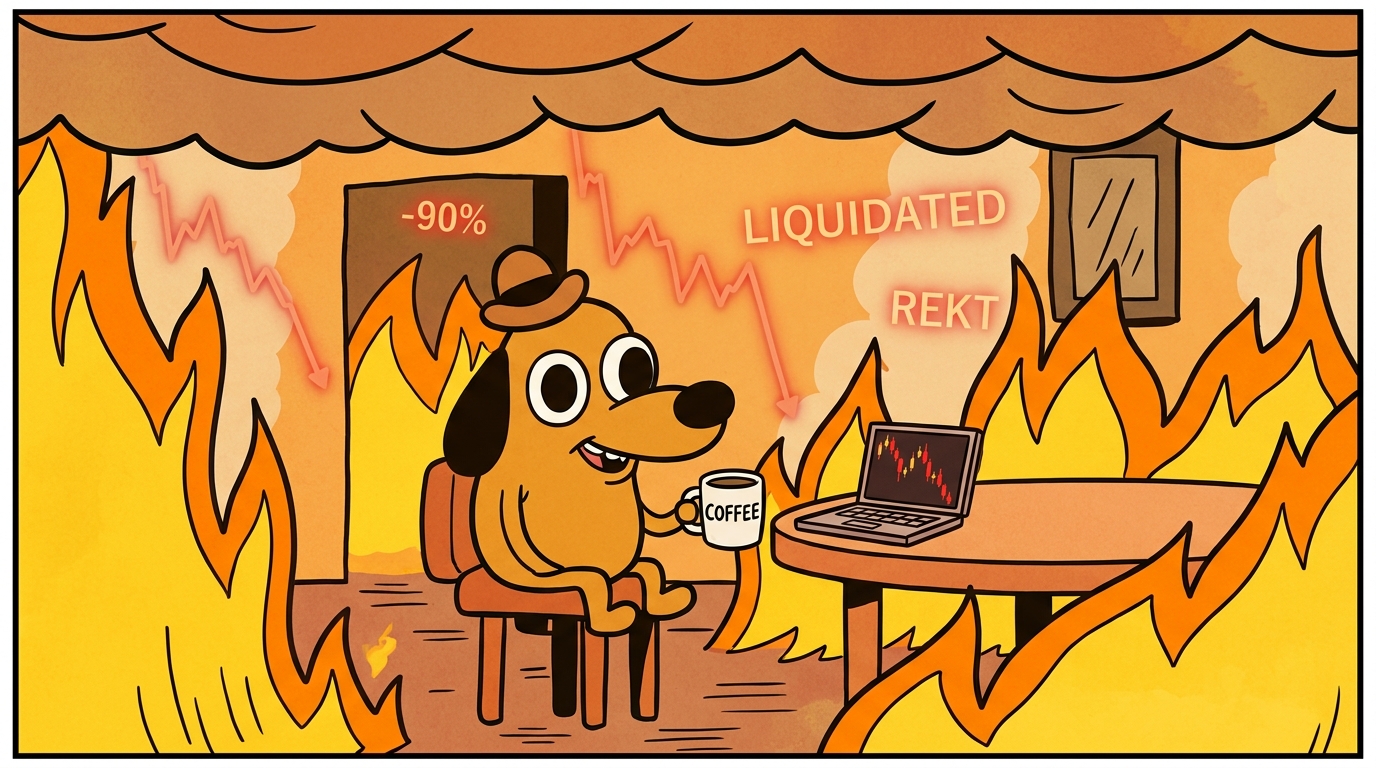
We have all been there. You open a "high-conviction" leveraged long, the chart immediately does the opposite, and you are sitting in the flames whispering "this is fine." Spoiler: it is usually not fine. Every time you bet on price direction you are up against HFT desks, market makers and quant funds whose entire job is to take the other side of your trade. The house edge is not on your side. The uncomfortable truth: if you are guessing direction, you are the product.
But there is a quieter game almost nobody talks about — one where you stop predicting price entirely and still get paid. It is called delta-neutral funding farming, and depending on the pair it pays anywhere from 30% to 200%+ APR right now. This is the full playbook.
What funding farming actually is
Perpetual futures have no expiry date. To keep their price glued to spot, exchanges use a funding rate — a small payment that flips between longs and shorts every 1 to 8 hours. When a market is crowded with longs, longs pay shorts. When it is crowded with shorts, shorts pay longs. It is just a balancing fee.
Here is the trick: you do not have to pick a side of the bet — you can collect the fee instead. You open the exact same size on two venues at once: long on the venue where you will be paid funding, and short on another venue on the same asset. Your price exposure cancels out — if BTC pumps, your long gains and your short loses the same amount, net zero. What is left is the funding spread between the two venues, dripping into your account every few hours. No direction. No liquidation roulette. Just the fee.
The numbers are real, right now
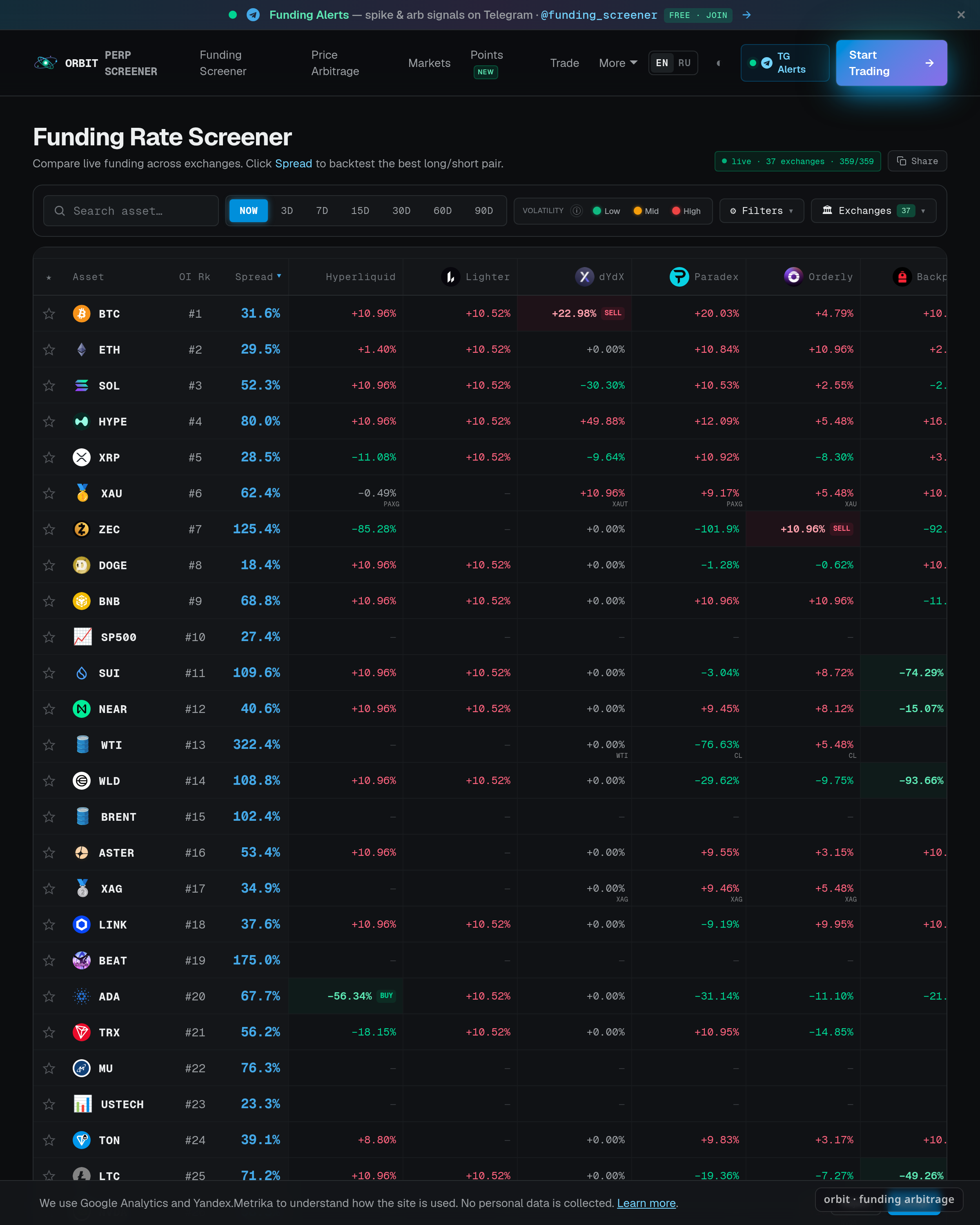
This is not theory. A snapshot from a single afternoon: BTC around 27% APR spread (DEX vs DEX), ETH around 30% (CEX vs DEX), SOL around 52%. Liquid mid-caps run far higher — ASTER around 51% with roughly $18M open interest per leg, MEMECORE around 120%, SKYAI around 154%. These are annualized rates on market-neutral positions, not moonshot gambles.
The actual steps
- Pick an asset with a wide, persistent funding spread between two venues.
- Go long the same notional on the venue paying you, short it on the other. Equal size — this is what makes you delta-neutral.
- Collect funding every interval (1h, 4h or 8h depending on venue).
- When the spread compresses to near zero, close both legs and rotate to the next opportunity.
Costs to respect: taker and maker fees on both legs, plus slippage on entry and exit. A 50% APR spread is only real if the round-trip cost does not eat it. This is exactly why you backtest a pair before you size up.
Entering the position — a real BTC example
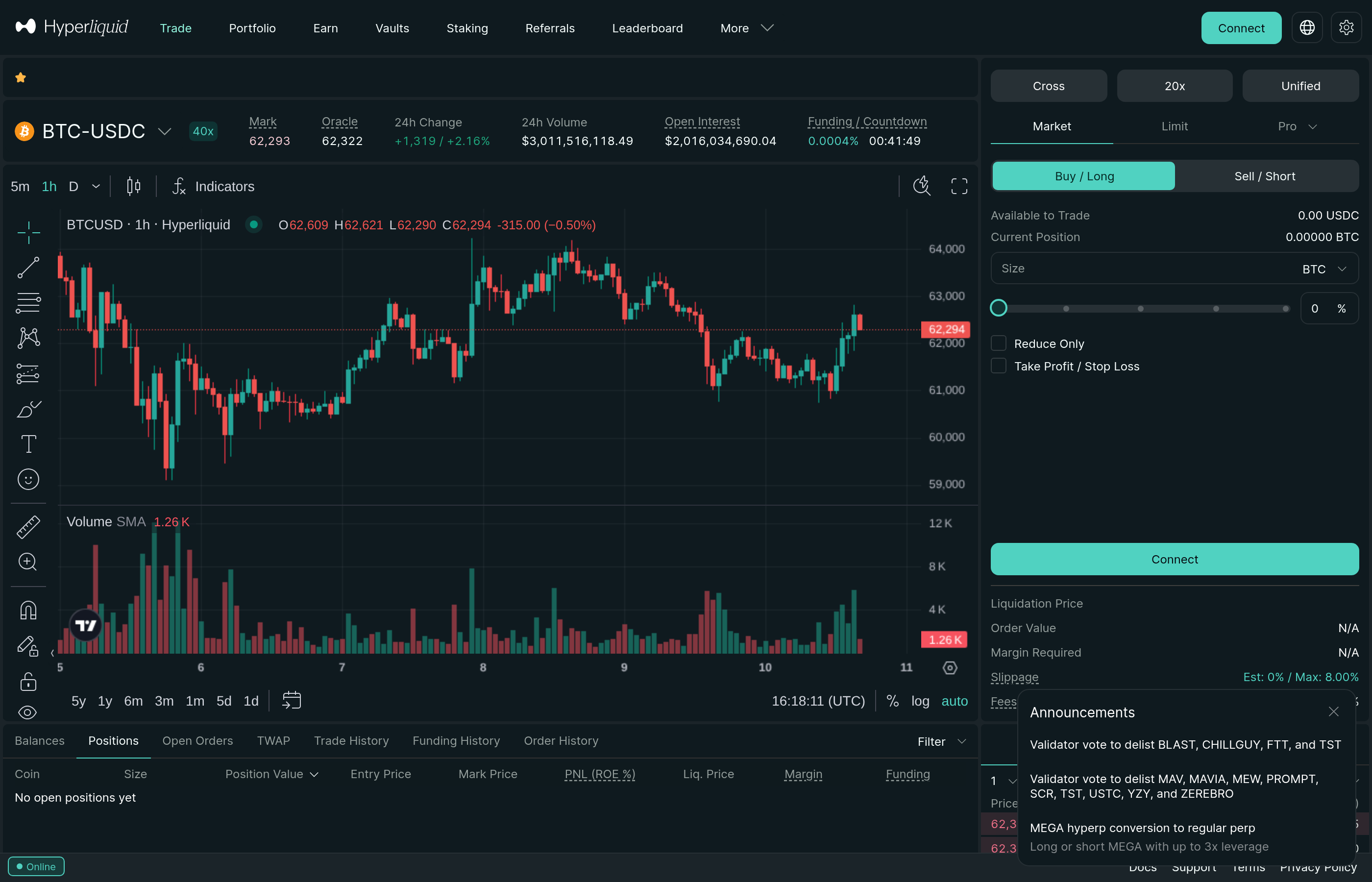
Let us actually open one, on the real exchange screens, so nothing stays abstract. We will run BTC delta-neutral: long on Hyperliquid (a perp DEX) and short on Paradex (another perp DEX). Same asset, two venues, opposite sides.
First, read the funding on each venue before you commit. On Hyperliquid the BTC perp shows its funding rate and a live countdown to the next settlement right under the price. On Paradex the BTC-USD perp shows its 8-hour funding plus the live order book. The gap between these two rates — adjusted to the same interval — is the spread you are about to harvest.
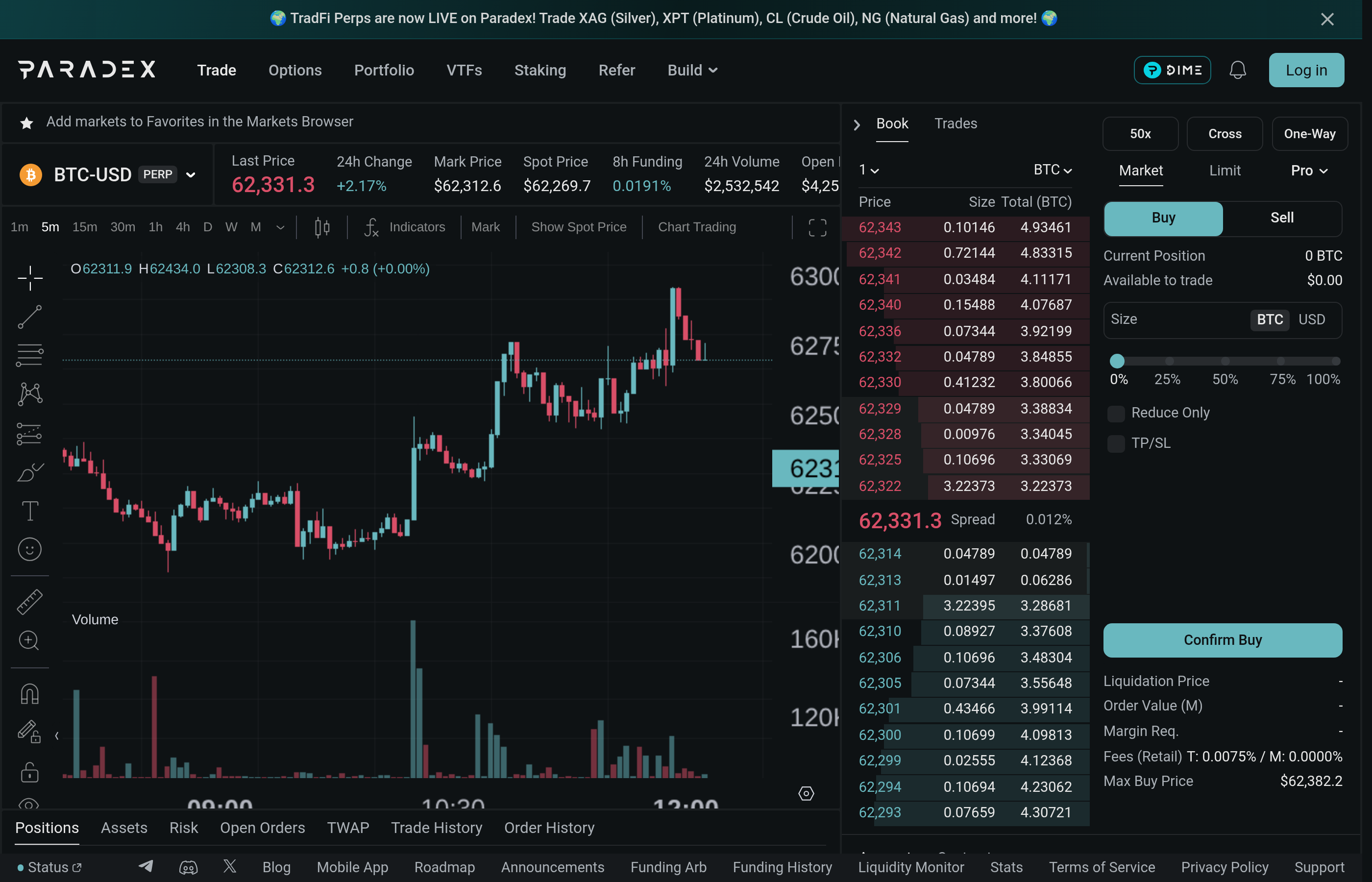
Now read the two costs the order book is telling you about — exactly the nuances people skip. (1) The bid/ask Spread highlighted in the Paradex book (~0.012%) is what a market order pays to cross instantly; on a thin book this can dwarf the funding you earn. (2) The Fees (Retail) line (Paradex 0.0075% taker) is charged on entry and exit, on both venues. Add them up: you pay roughly spread + taker on each leg, twice (in and out). That is your real break-even — the funding spread has to clear it before you see a cent.
- On Hyperliquid: select Market, Buy / Long, set Size to your token amount (e.g. 0.08 BTC), place the order.
- On Paradex: select Market, Sell / Short, set the identical Size (0.08 BTC), confirm.
- You are now flat on price and long the funding spread. Check both positions show the same size with opposite sign.
- To exit: market-close both legs at the same time so you do not get left one-sided during the gap.
Proof #1 — BTC, market-neutral
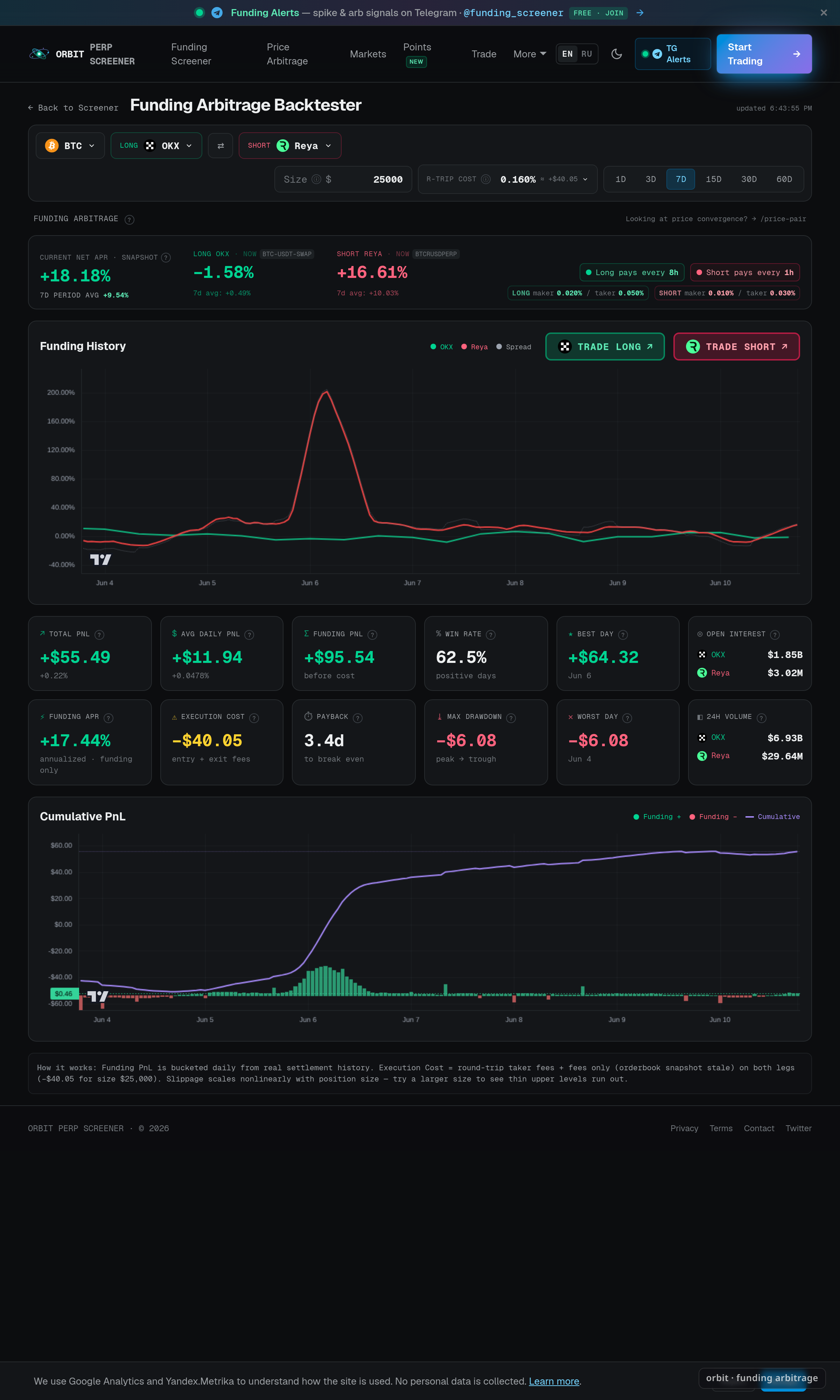
Do not trust APR labels — backtest them. This is a real 7-day backtest on a $25k BTC funding-farm position, long OKX and short Reya: a realistic funding APR around +17%, total PnL of +$55 after fees and slippage, 62.5% green days, and price PnL on the pair basically flat — that is the point, you are neutral. The cumulative-PnL curve grinds up steadily instead of swinging with the market.
The gap between the "naive" headline APR and the realistic one is your cost of doing business — fees plus order-book slippage on both legs. A tool that subtracts it upfront is the difference between a real edge and a screenshot fantasy.
Proof #2 — ETH on an early-stage DEX
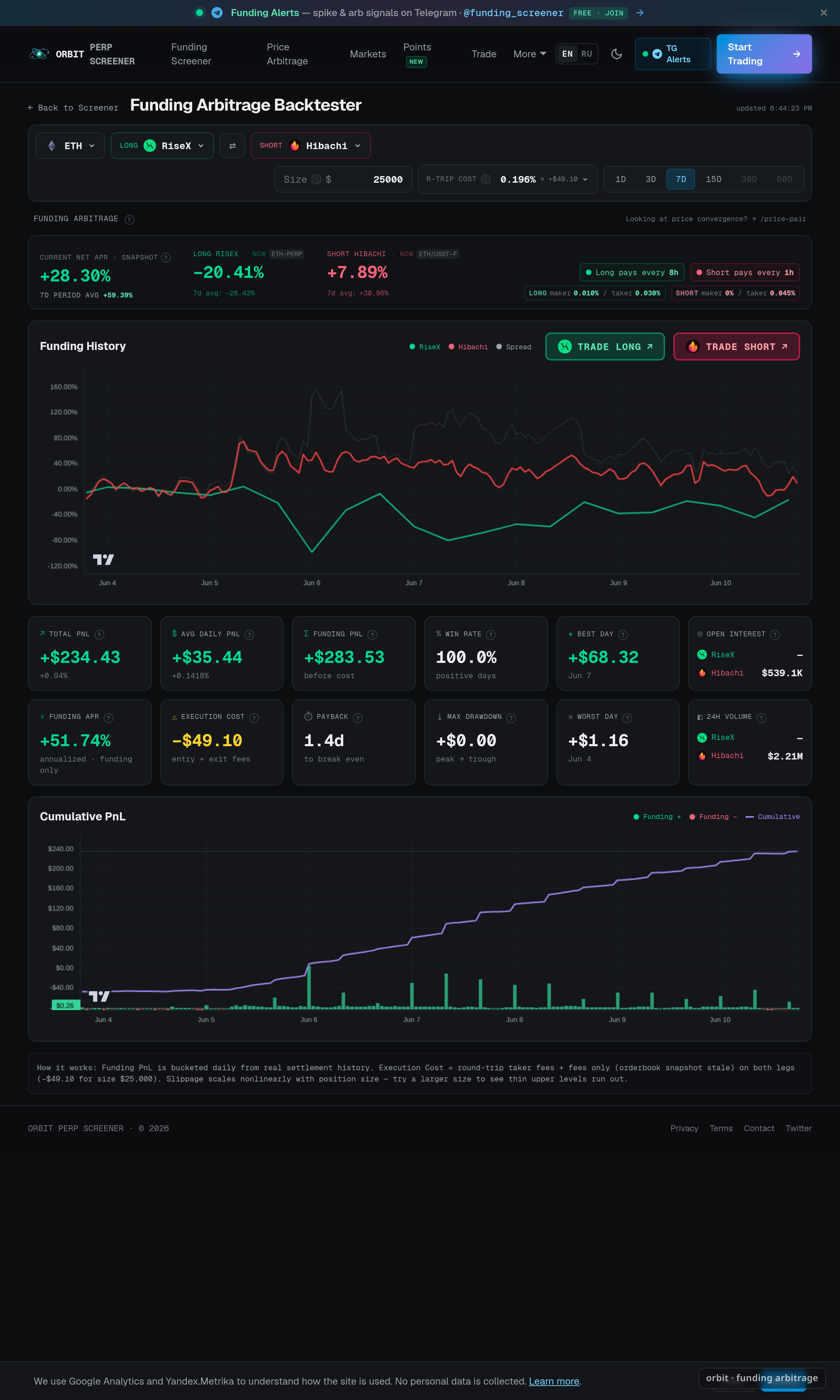
Same method, hotter venue. A 7-day backtest on a $25k ETH position, long RiseX and short Hibachi: a realistic funding APR above +50%, total PnL of +$234 after costs, 100% green days, best day +$68. RiseX is an early-stage perp DEX — exactly the kind of fresh venue where funding runs hot.
The bonus layer — free perp-DEX points
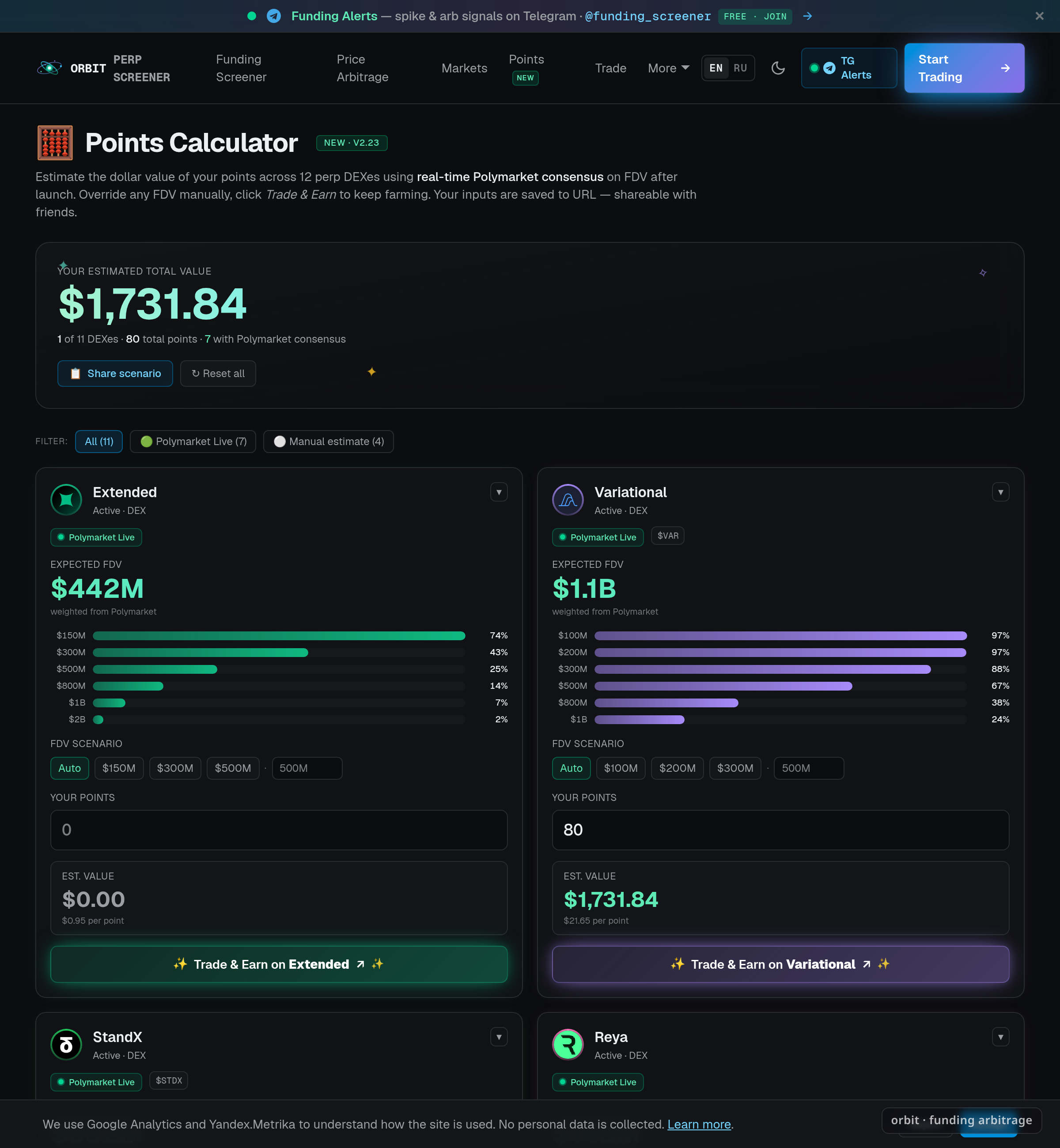
Here is what turns a good yield into a great one. Most perpetual DEXs have not launched their token yet — and they reward trading volume with points that convert to a future airdrop. When you funding-farm on one of those venues, you are already generating the volume to earn the spread, so the points come for free, on top. The Points Calculator estimates the dollar value of those points using live Polymarket FDV consensus — for example one venue priced around $442M FDV, another near $1.1B. Stack that airdrop value onto your funding APR and your real, combined return often jumps well past the raw funding number. This is the part newcomers leave on the table.
The risks nobody screenshots
Delta-neutral is not risk-free. Anyone who tells you otherwise is selling something:
- Funding flips. A spread paying you today can invert tomorrow. You manage it, you do not set-and-forget.
- Execution drift. If you cannot open both legs at the same size and price, you are briefly directional — exactly when volatility spikes.
- Single-leg liquidation. If one venue moves hard against your position and your margin is thin, that leg can get liquidated, leaving you naked on the other. Keep healthy margin on both.
- Venue and counterparty risk. Thin DEXs, withdrawal limits, smart-contract risk. Size into newer venues carefully.
- Fees and slippage quietly eat thin spreads. Below roughly 15–20% APR it is often not worth the operational hassle.
Treat it like a business with an edge, not a money printer. The edge is real; the discipline is the job.
How to start in 5 minutes
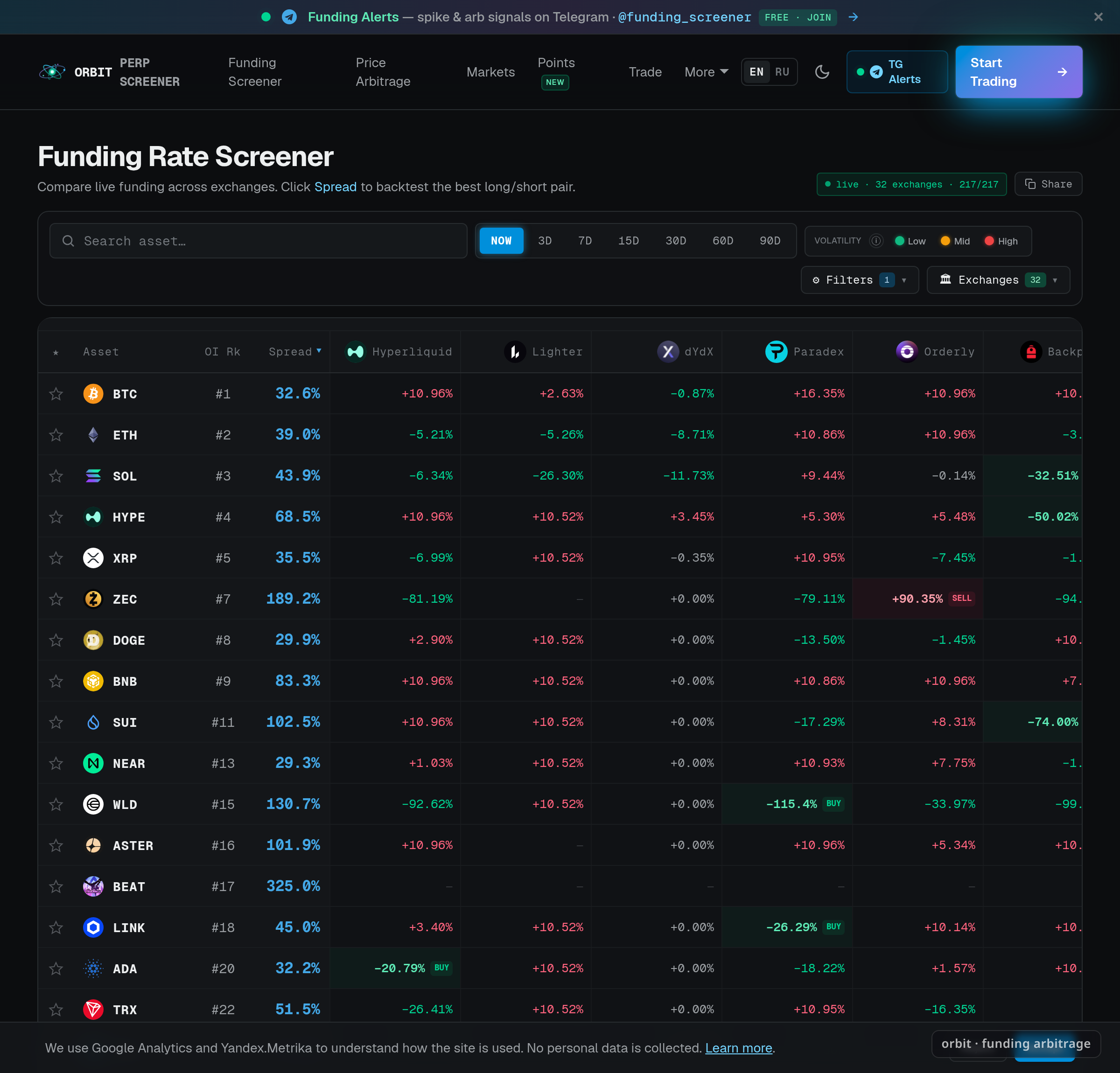
You do not need a quant desk. You need to see the spreads clearly and backtest before you size up. That is the entire reason ORBIT exists — a live perp screener that ranks funding spreads across 30+ CEXs and DEXs in one matrix, backtests any long/short pair with real fees and order-book slippage, shows funding yield and estimated perp-DEX points value in one combined number, and flags price-arbitrage spreads on convergence trades too.
The workflow: open the Funding Screener, sort by spread, click a pair, backtest 7/30/90 days — if the combined APR survives costs, that is your trade. Stop guessing price. Start collecting the fee.